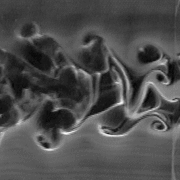
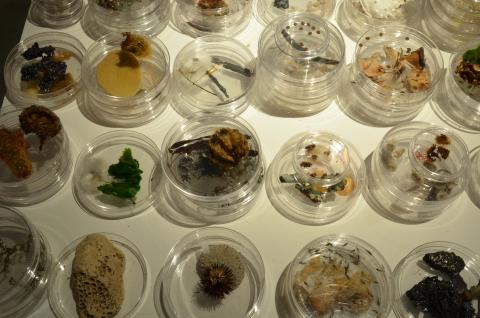
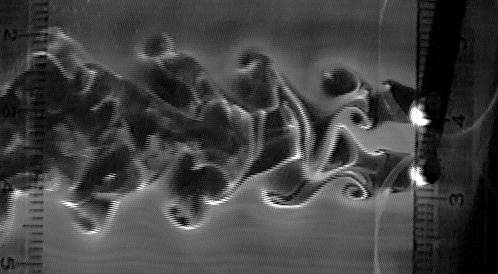
Sci|Eye Apparatus is an experimentation in images, sound, and space, as we shape them with our tools. The Apparatus takes us through different scales, states, and dimensions. The intention is to help us imagine the invisible with composed aural atmospheres.
Blanka Buic studied music and economics, takes pictures and shoots videos for a living, and started exploring scientifically-inspired perception when she joined the Art | Sci center in 2009.
Soundscapes were created by Günther Jones, inspired by both natural and man-made rhythmic sounds that have their own kind of music.
Art|Sci Gallery / CNSI 5419. Click here for a downloadable PDF map and here for an interactive campus map.
Ruby Carat (Cold Fusion Now)
Blanka Earhart (independent media artist and author)
Douglas Campbell (Founder, ProjectFresh)
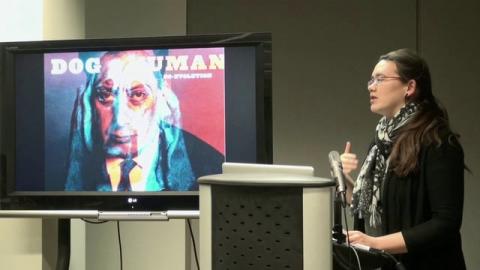
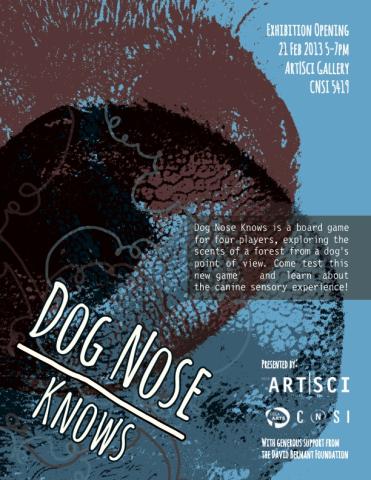
Adeline Ducker (Dog Nose Knows board game design / graphics)
Alex Groff (independent game and web designer)
Alison Lipman (co-founder of SELVA International)
Mathias Dörfelt (graduate student, Design | Media Arts)
Zac Harlow (graduate student in Ecology and Evolutionary Biology)
Nicholas Hanna (graduate artist)
Everyone invited will introduce their work in 4-minute pecha-kucha style presentation. This is followed by drinks and food / socializing and making new connections.
Are you working on a cool project? We invite you to submit your name for this LASER! Send your title and 3-5 images to artscicenter@gmail.com
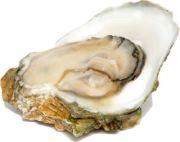
This Valentine's Day in Victoria Vesna's honors class -- Biotech + Art -- we'll explore with Christina Agapakis the history, biology, and chemistry of aphrodisiacs, from medieval nutritional handbooks to modern biochemistry. How do foods influence our moods and stimulate our senses? Are oysters romantic placebos or vectors for arousing micronutrients? Exploring aphrodisiacs can tell us a lot about how we understand nutrition and health as well as the aesthetic and chemical experience of foods.
RSVP essential!
Broad Art Center 240 Charles E. Young Drive, Room 5240 Los Angeles, CA 90095
5-7pm
Parking is $11 all day, and is available in structure 3, adjacent to the building. For more information, call 310.825.9007.
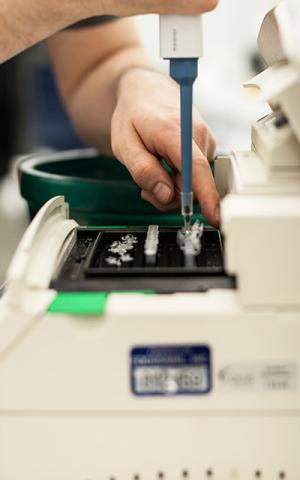
In this workshop we’ll explore the genetic basis of taste perception, specifically the inherited ability to taste a bitter chemical. Throughout the process we will examine the tools and techniques used by genetics labs and, increasingly, hobbyists and biohackers. By physically testing ourselves for this particular genotype we can gain the skills to analyze all of our genes, increasing our ownership of our personal data and a new way to explore life in general.
Thursday, January 24th, 2013
5-7pm
Broad Art Center
240 Charles E. Young Drive, Room 5240
Los Angeles, CA 90095
Parking is $11 all day, and is available in structure 3, adjacent to the building. For more information, call 310.825.9007.
This event is FREE and open to the public.
Click here for a downloadable PDF map.
Everyone invited will introduce their work in 3 minute pecha-kucha style presentation. This is followed by drinks and food / socializing and making new connections.
Are you working on a cool project? We invite you to submit your name for the next LASER scheduled for February 21st. Send your title and 3-5 images to artscicenter@gmail.com
Thursday, January 17th, 2013
CNSI 5th floor Presentation Space
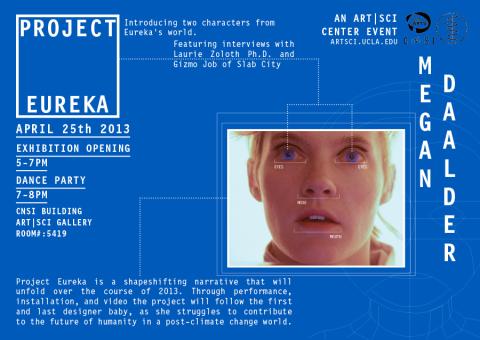
Project Eureka is a shapeshifting narrative that will unfold over the course of 2013. Through performance, installation, and video the project will follow the first and last designer baby, as she struggles to contribute to the future of humanity in a post-climate change world.
This iteration of Project Eureka will introduce two characters from Eureka's world.
Featuring interviews with Laurie Zoloth, PhD (Professor of Medical Humanities & Bioethics and Religion; Director of Center for Bioethics, Science and Society) and Gizmo Jon (of Slab City)
Between 7 & 8, the gallery will become a dance floor.
Thursday, April 25th, 2013
5-7pm
Art|Sci Gallery, CNSI 5419
Click here for a downloadable PDF map and here for an interactive campus map.
First interested in pattern formation through his experimental work on Rayleigh-Bénard convection during his PhD, Patrice le Gal was then especially interested in the formation and the interaction of Von Karman wakes and also in the instabilities of the Ekman boundary layer over rotating disks. He has published more than 70 research articles in fluid mechanics: on convective patterns, wakes, turbulence, rotating boundary layer instabilities, plankton bioluminescence and more recently on the elliptic instability. He is currently involved in experiments on stratified and rotating flows: strato-rotational instability, internal wave generation, wave breaking, vortex formation. All of these flows have applications in geo and astrophysics. Recently he developed several art-science projects in collaboration with J. Tejerina-Risso who is a video artist.
Abstract: WAVES is an Art-Science project to install videos, images and multimedia performances based on the visualization of water surface waves. We work at IRPHE (Institut de Recherche sur les Phénomènes Hors Equilibre) in Marseille for designing experiments to produce hydrodynamic waves. We aim to study the behavior of different types of waves and their evolution: generation, breaking, focussing. We present here the general property of waves to focus when properly generated or reflected. Using a parabolicaly shaped wave maker, we focus water waves in a region of the water surface classically called the Huygens Cusp in optics. At this cusp, the amplitude of the waves is increased by focusing and this leads to their breaking which is a typical property of water surface waves. We record these breakings using a fast video camera at a rate of 2000 images per second. A novel and spectacular vision of water wave breakings is obtained when playing these movies at slow speed.
Suzanne Anker is a visual artist and theorist working at the intersection of art and the biological sciences. Her works include digital sculpture, installations and large-scale photography. Her project, Genetic Seed Bank, demonstrates the recuperative and adaptive power of nature and the potential for organic materials as a medium for artistic expression.