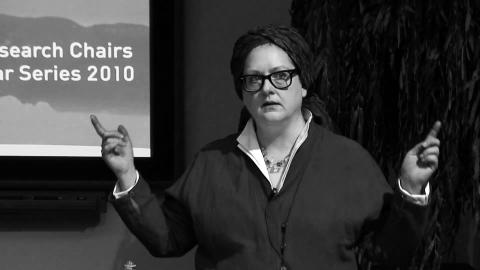
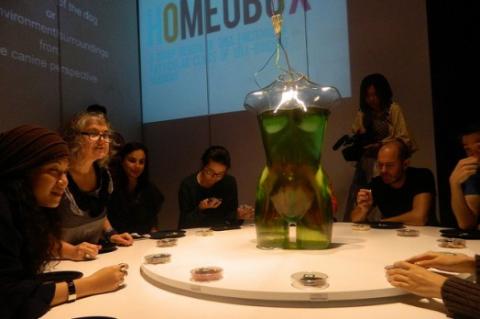
Takashi Ikegami is an associate professor in the Department of General Systems Sciences at the University of Tokyo. His works encompasses both the arts and sciences and deal with complex systems and artificial life. He comes to UCLA to start work on a NSF grant with Professor Charles Taylor and Victoria Vesna. Together they are developing the “Acoustic Sensor Arrays for Understanding Bird Communication”
Mizuki Oka
Exploring Default Mode and Information Flow on the Web
Using the unique ideas of the recent discovery in brain science of the
default mode, Oka studies the autonomy and information flow in a Web
system. In this talk, Oka discusses her study on the weak fluctuation
not driven by social context as a default mode of the Web derived from
brain science.
Time:
Lecture @ 2pm
Location: UCLA Broad Art Center, room 5240
Spring 2011 Art|Sci Artist in Residence Dr. Diane Gromala spent her time at UCLA researching the expression of pain at UCLA’s John C. Liebeskind History of Pain Collection in the Louise M. Darling Biomedical Library.As the Founding Director of the Transforming Pain Research Group, Gromala collaborates with prominent pain physicians, a neuroscientist, a psychophysicist, artists and animators, computer scientists and engineers and interaction and sound designers.
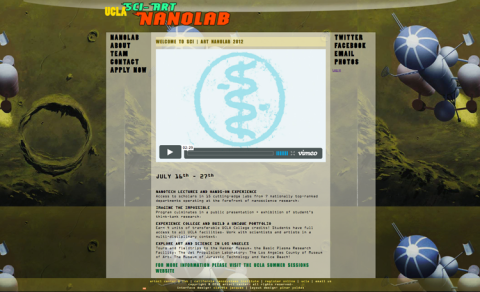
The Sci | Art NanoLab is a highly competitive summer program for high school juniors and seniors interested in collaborating with diverse and notable minds to challenge traditional, polarized perspectives of the arts and sciences. Throughout the 2-week intensive program, students will make connections between cutting edge scientific research, popular culture and contemporary arts. Lab visits, workshops, hands-on experiments, and meetings with world renowned scientists will be balanced with visits to museums, daily movie screenings and meetings with famous contemporary artists who collaborate with scientists.
The Wild West of Chronic Pain:
Collaborations among Artists, Scientists and Health Care Experts
Why is a media technology -- immersive VR -- known as a "non-pharmacological analgesic"?
Can a robot reduce anxiety?
How might novel forms of social media combat the social isolation experienced by seniors who have chronic pain?
What do Sufi practices and phosphorescent creatures have to do with pain?
Members of the Transforming Pain Research Group comprise artists, musicians, computer scientists, engineers, designers, psychophysicists; and pain physicians. All are exploring the ways that new technologies may help the 1 in 5 people who suffer from chronic pain.
Referred to as the silent epidemic, this relatively new disease has no known cause and no cure. While health care researchers explore its etiology, experts from diverse disciplines are working on ways to help with managing chronic pain. See what a group of innovative researchers north of the border are doing.
November 30th: . Guided Tours: Noon to 5pm
ArtSci Gallery, CNSI Bldg., Room 5419 . Reception: 5:30-7:30pm
CNSI Lobby
“Before I sink
Into the big sleep
I want to hear
I want to hear
The scream of the butterfly”
(Jim Morrison, “When the Music is Over”, 1967)
Once an artist takes on the challenge of making the invisible visible, or the inaudible audible, s/he is almost immediately thrown into the realm of energy at the edge of art and science. The established art world based on visual culture finds it difficult to place this kind of work. The scientific community, used to working in this realm in a reductionist way, finds it hard to comprehend. Yet the public seems to be drawn to artwork residing “in between”, and there seems to be a universal need for a connection to the spiritual realm beyond what established religions offer. As many speculative ideas in the West circulate around ideas of energetic approach to matter in general, particularly the body and mind, alternative medicine and other Eastern philosophies are thriving. Nanotechnology mixing with the quantum fields, inexplicable to the rational reductionist minds, opens up new territories of vibration matters that brings us back to poetic expressions.
The Ancient Greek word for "butterfly" is ψυχή (psȳchē), primarily means “soul” and/or “mind” and the sensation of feeling “butterflies in the stomach” is most often experienced prior to important events, related to nervousness and can be experienced in situations of impending danger. It is possible that the condition, frequently felt by an oncoming new experience or relationship, is caused by a surge of adrenaline. One could look at the current condition of humanity as a collective state of nervousness, especially in relation to the current economic / ecological crisis that is global. The “butterfly effect” has been very much in the public imagination in the last two decades with numerous movies, Sci-Fi novels and even games, center plots around the idea that one butterfly could have a far-reaching ripple effect in the subsequent historic events.
……
Victoria Vesna is a media artist, Professor at the Department of Design | Media Arts at the UCLA School of the Arts and director of the UCLA Art|Sci center. Currently she is Visiting Professor at Art, Media + Technology, Parsons the New School for Design in New York and at the School of Creative Media in Hong Kong. Her work can be defined as experimental creative research that resides between disciplines and technologies. She explores how communication technologies affect collective behavior and how perceptions of identity shift in relation to scientific innovation. Her most recent experiential installations -- Blue Morph, Mood Swings and Water Bowls, all aim to raise consciousness around the issues of our relationship to natural systems. Other notable works are Bodies INCorporated, Datamining Bodies, n0time and Cellular Trans_Actions. She has long-term collaborations with a nanoscientist, a neuroscientist and Buddhist monks.
Victoria has exhibited her work in 20+ solo exhibitions, 70+ group shows, published 20+ papers and gave a 100+ invited talks in the last decade. She is recipient of many grants, commissions and awards, including the Shanghai International Art Science exhibition award for best art work in 2008, the Oscar Signorini award for best net artwork in 1998 and the Cine Golden Eagle for best scientific documentary in 1986. Vesna's work has received notice in numerous publications such as Art in America, Nature, National Geographic, the Los Angeles Times, Spiegel (Germany), The Irish Times (Ireland), Tema Celeste (Italy), and Veredas (Brazil) and appears in a number of book chapters on media arts. She holds a PhD from the University of Wales and is the North American editor of AI & Society journal and author of Database Aesthetics: Art in the Age of Information Overflow edited volume (Minnesota Press, 2007), and recently published Context Providers: Conditions of Meaning in Media Arts, co-edited with Margot Lovejoy and Christiane Paul (Intellect, 2011).
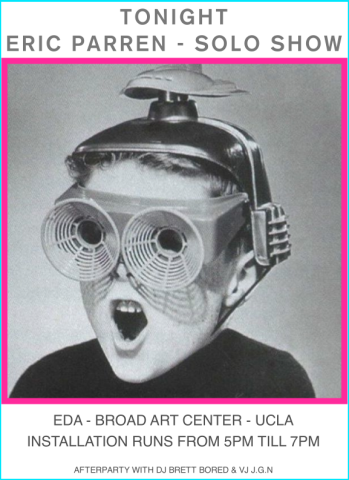
Eric Parren (1983, NL/US) is a transdisciplinary artist who lives and works in Los Angeles. He studied at the Interfaculty ArtScience of the Royal Conservatory and the Royal Academy of Art in The Hague where he received his BFA in 2009. Currently he is pursuing an MFA at the Design | Media Arts department of the University of California Los Angeles. His main focus is on live audiovisuals, generative art, artificial intelligence, bio-inspired art and human computer interaction. A special field of interest is evolutionary systems and their creative possibilities. He is part of the art collective Macular and he is the founder and co-host of the La Force Sauvage internet radio-show.
NEW GENERATION SCIENTISTS SPEAK: SCI|ART CONNECTIONS + NETWORKS
November 3rd, 4:00-6:30pm
School of Creative Media, City University
Future Cinema room, 6th floor
It used to be common for a scientist to be an artist and vice versa. Somewhere
during recent history Two Cultures between the Arts and the Sciences emerged,
making it difficult to cross boundaries, creating the illusion that the gap between
them is unbridgeable. But a new generation of scientists and artists are emerging,
fostering dialog and innovating collaborations, thereby creating a new space where
technology blends with design, where scientific research is coloured with art.
In recent art/science dialogues, we tend to hear about artist’s experiences and
inspirations in relation to these kind of cross‐disciplinary collaborations. This panel
is made up of scientists who are active in their respective fields but also have long
term collaborative relationships with artists. They will discuss, from their point of
view, why it is important to engage these new research territories at this historical
juncture. In relation to this projects that they have been involved with will be shown,
including the current collaborative work on display at upcoming Microwave fectival.
Moderated by an artist, these scientists will discuss our experiences in melding (or
re‐melding) these two worlds – from a nanoscience, neuroscience and
biotechnology perspective merging with that of design media arts. In the process we
hope to engage the audience with thoughts about the future of Sci|Art, the process of
collaboration and how to nurture its growth.
Moderated by Victoria Vesna, Ph.D.
………..
Victoria Vesna
Victoria Vesna, Ph.D., is a media artist and Professor at the UCLA Department of
Design | Media Arts and Director of the Art|Sci center at the School of the Arts and
California Nanosystems Institute (CNSI). She is currently a Visiting Professor at SCM, City University, Hong Kong, Parsons Art, Media + Technology, New York, a senior
researcher at IMéRA – Institut Méditerranéen de Recherches Avancées in Marseille.
Her work can be defined as experimental creative research that resides between
disciplines and technologies. With her installations she explores how
communication technologies affect collective behavior and how perceptions of
identity shift in relation to scientific innovation.
Adam Stieg
Adam Stieg, Ph.D ‐ Director of the Sci | Art NanoLab Summer Institute. Originally
raised in the suburbs of Chicago, Adam received his B.A. from Drew University and
Ph.D. in Physical‐Inorganic Chemistry from UCLA. As Scientific Director of Nano and
Pico Characterization at the California NanoSystems Institute, his research focuses
on the design and application of physical methods toward characterization of
nanoscale systems, ranging from the physical to biological, through the development
of multi‐environment, high‐performance scanning probe microscopes. Numerous
ongoing, collaborative efforts involve the study of molecular machines and devices,
nanoparticles for targeted drug delivery, inorganic carbon‐based materials, and
tailored functional surfaces for stem cell differentiation. Recently established
research directions include the use of engineered, supramolecular protein
assemblies toward the construction of functional meso‐scale devices and the pursuit
of physically derived intelligent systems through neuromorphic computation. His
direct involvement in a variety of collaborative, interdisciplinary research projects
between the arts and sciences has provided both inspiration and motivation for
bringing the power of such creative approaches to the forefront of education.
Siddharth Ramakrishnan
Siddharth Ramakrishnan, PhD. is a Neuroscientist currently working in the field of
Bioelectronics at Columbia University in New York. He works on designing
microchips to record from brain cells and using proteins to create bio‐batteries and
biosensors. As a postdoctoral researcher at UCLA (2006‐2009) he studied the
development and physiology of reproductive neurons in the zebrafish brain. His PhD
dissertation (UIC, 2005) addressed pattern generating networks in snails and how they
were modulated to elicit various behaviors. He co‐teaches the Hybrid
Worlds: Nano_biotech + Art course with Victoria Vesna at the New School of Design, New York. In 2011, he was invited to speak at DASER, at the National Academy of
Sciences in Washington, D.C. His collaborations with artists and architects have led
to exhibitions and documentaries that blend the worlds of art and science. Currently
he has been appointed Fellow of the UCLA Art|Sci center.
Romie Littrell
Romie Littrell’s research is focused on the exchange of tools and methods between
artists and scientists. In the present he is a graduate student in the Biomedical
Engineering Dept. at UCLA. He received his BA in Molecular and Cell Biology from
UC Berkeley. Since then he has engaged in a wide array of biological research
including maize genetics, cornea tissue engineering, microfluidic bioreactors, and
cell‐chip interfaces. His current research focuses on creating non‐institutional
laboratories and abstracting biological techniques to facilitate those in unrelated
fields to perform advanced biology. Romie is also very interested in synthetic
biology, is the founder of SoCal DIYBio, and was a grad advisor to the 2007 MIT
iGEM team.
Art and Science Symposium | Microwave Festival 2011 藝術及科學研討會 Date 日期 29.10 {Sat六} Time 時間 14:00 - 17:00 Venue 地點 Lecture Theatre 1 (M3017), Level 3, Run Run Shaw Creative Media Centre, 18 Tat Hong Avenue, Kowloon Tong 九龍塘歌和老街18號邵逸夫創意媒體中心L3演講廳1(M3107)
SPEAKERS 講者:講者:
I. Irène Hediger 艾蓮.海迪格 Co-Director and curator of the Swiss artists-in-labs program, Head of Sino-Swiss and Indo-Swiss Residency Exchange Project, Institute for Cultural Studies in the Arts ICS, Zurich University of the Arts (ZhdK), Zürich 瑞士蘇黎世藝術大學「實驗室藝術家」計劃聯合總監及策展人 Think Art – Act Science 思考藝術 - 科學行徑
II. Jill Scott 吉爾.史葛 Co-Director of the Swiss artists-in-labs Program, Professor for Research in the Institute Cultural for Studies in the Arts, Zurich University of the Arts (ZhdK), Zürich 瑞士蘇黎世藝術大學藝術文化研究學院研究教授,「實驗室藝術家」計劃聯合總監 Neuromedia 神經媒介
III. Victoria Vesna 維多利亞.韋斯娜 Professor at Parsons The New School for Design, New York, and Founder/Director of the Art | Sci Center + Lab, UCLA School of the Arts and California Nanosystems Institute (CNSI) 紐約帕森設計學院教授,加州大學洛杉磯分校藝術及科學中心創辦人及主席 Treading the Art|Sci path: Being in Between 藝術|科學之路:擲界
IV. Peter Weibel 彼得.韋伯 Chairman and CEO of the ZKM/Centre for Art and Media, Karlsruhe, Germany 德國卡爾斯魯厄ZKM媒體藝術中心主席及行政總裁 The Future of Media: From Visual Media to Social Media 預言媒體未來: 由視覺媒體到社交媒體
Fall / Winter 2011-12 Art|Sci Artist in Residence Colleen Macklin focuses on developing new games, simulations, and play experiences which encourage experimental learning and investigation into social and global issues. She has led social media projects with the UN and Open Society Institute and was exploring scientific concepts for game design during her residency at UCLA..
+
Parsons Design + Technology MFA student work from Victoria Vesna's NanoBioArt class, featuring the work of Jeremy Peterson, winner of best final project.
Time:
Lecture @ 2pm
Exhibition Openings: 5-7pm
Location: Lecture @ UCLA Broad Art Center, room 5240,
Mixer @ CNSI
Nanoscientist Odo is Art | Sci DJ+ Molecular refreshments provided
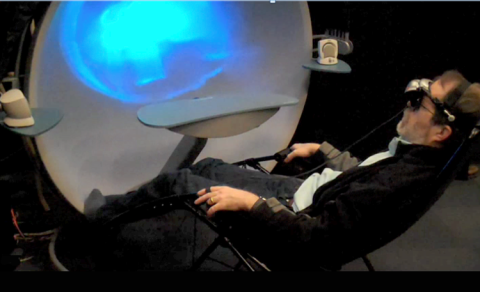
Prof. Diane Gromala, Founding Director of the Transforming Pain Research Group (TPRG) will be exhibiting the evolving work of this team of world-class researchers. Building on an extensive knowledge base from the fields of Pain Medicine, Interactive Art & Design, Computer Science, Neuroscience and Psychophysics, the research group is developing innovative technologies to address chronic pain, a disease that affects 1 in 5 North Americans. Technologies include meditation, biofeedback, immersive Virtual Reality, visualization, robotics and social media.
Diane Gromala is an Associate Professor in the School of Literature, Communication, and Culture, where she teaches in the graduate program in Information Design and Technology at Simon Fraser University. She is an adjunct faculty member in Industrial Design and a faculty member of the transdisciplinary GVU (the Graphics Visualization and Usability Center). Dr. Gromala was one of the first artists to work with immersive virtual reality, beginning with Dancing with the Virtual Dervish. Co-created with Yacov Sharir at the Banff Centre for the Arts' Art & Virtual Environments residency, this piece has been exhibited worldwide from 1993-2004. Subsequent immersive VR work was designed for stress-reduction and pain distraction during chemotherapy. Dr. Gromala's work is currently in use in over 20 hospitals and clinics.
Exhibition Dates: September 29 — October 31, 2011
Art + Sci Gallery
California NanoSystems Institute – UCLA
Room 5419