Victoria Vesna’s work has long focused on immersing her audiences in installation spaces that are meant to slow down time and take us into other dimensions. This led her to work in close collaborations with musicians, sound artists, nanoscientists, biologists, neuro-scientists and buddhist monks among others. Some examples of work in the past two decades are the NanoMandala, Water Bowls, Blue Morph, Octopus Brain Storming, Bird Song Diamond and most recently the Noise Aquarium. In this new work, together with her collaborators from the UCLA Art Sci collective and Harvestworks, she takes us on a meditative journey to outer space.
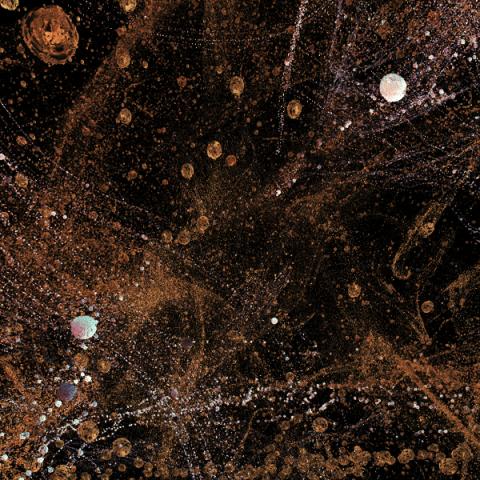
Premiering with the support of Harvestworks, this work is meant to be experienced as a guided meditation bringing to life the sensations of meteorites and micro-meteorites falling on all continents and mixing with the anthropogenic dust falling on our planet from many dimensions. Layers of sounds from inner and outer space with animations of dust and data driven by corona deaths are presented with the intent of honoring those who left their bodies without preparation and all who are suffering.
This online version was created as a meditation that is guided by the artist following the extra-terrestrial, terrestrial, and human-made dusts traveling far and wide and creating complexity that is part of an invisible reality. Most go about their daily life without being aware of ever thinking about the extraterrestrial dusts that could be on their kitchen floor, right here on earth. The alien signal is lost in the human noise and the group meditation reclaims our vision of planetary citizenship.
We are created from stardust by nuclear fusion, like our myriad siblings – animals, plants, insects, plankton, bacteria, and viruses, and we all function together in vibratory fields – bottom up just as nature and nanotechnology works. [Alien] Star Dust rains on us every day and this piece brings these particles to our attention and reminds us of our interconnected heritage in the larger cosmos. Dust knows no borders.
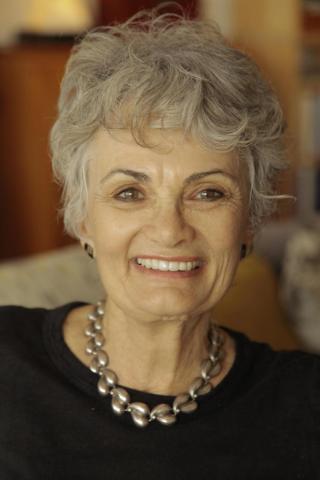
In this engaging episode, Claire Farago speaks with urgency about the Climate Crisis advocating that we think of ourselves relationally, to the world and people around us, and not individually. She provokes, "how do we build support for planetary citizenship?" Nudging further that art and science collaborations are critical for building this future, Claire and Victoria take a deep look through art history, discussing works and examples of how throughout time collaborations and interdisciplinary thinking has produced novel and thoughtful advances. This is a wonderful conversation that is packed full with stories, information, and lessons. It is surely not to be missed!
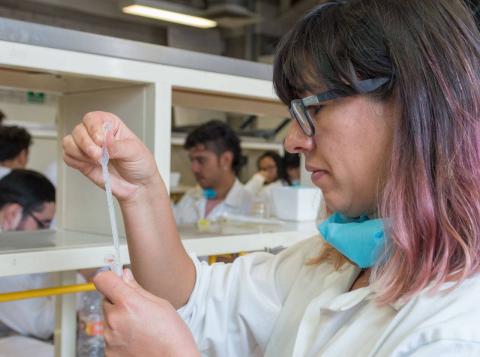
In this episode we are joined by the ever-inspiring María Antonia González Valerio a philosopher and professor at the National Autonomous University of Mexico (UNAM), who invites us to really look at and consider how we are responding to the pandemic in our institutions, in our bodies, and in our communities. María Antonia is interested in our incapacity to stop, to slow down and questions why we as humans have responded to this unprecedented circumstance with the mentality that we must continue business-as-usual. She proclaims, "Let the extraordinary be extraordinary! Why are we so afraid to stop?"
María Antonia also strongly urges us to resist the normalization of online teaching and education. Within her experience, this platform greatly limits interactions and community-building which are the aspects of education that truly allow for learning to take place. When our eyes and sense of ourselves and one another are limited to a 2-dimensional screen, we lose our bodies, we lose our transmission of affect and connection. This conversation and ideas provoked by María Antonia and Victoria is a reticent call to action, reminding us to remember the phenomenology of our bodies, to step back into ourselves and to reconnect to the physical and each other.