Gustavo Alfonso Rincon, Ph.D., is an architect, artist, curator, and media arts & design-engineering research scholar. He is an advocate for education and research as a human right. His academic and creative work has been exhibited nationally and internationally, while his professional practice has served clients across the globe.
---
Curating Immersive Worlds: AI Visions, Spatial Narrative, and Speculative Media Architectures
A rethinking of the New Media Architectures (NMA) conceptual framework emerges as media arts research and technology continue to evolve through a series of curatorial investigations situated at the intersection of art, design, education, and immersive virtual environments (IVE) research. This presentation explores a journey through the language of experimental media design practices and speculative spatial systems that examine the future of artistic production, technological and sensory culture, and interdisciplinary research.
The presentation frames an Art, Architecture, and Media Arts & Sciences research practice grounded in immersive design-engineered environments, computational worldmaking practices, and augmented media curatorial experiments. A range of creative research collaborations will be discussed, from investigations developed through the AlloSphere Research Facility to exhibition and community engagement initiatives presented through ACM SIGGRAPH conferences. The presentation will also reflect on a continuing series of online dialogues initiated at the beginning of the pandemic that explored AI, architecture, emerging media cultures, and science, organized in collaboration with Digital Futures.
Finally, the presentation revisits a series of ongoing curatorial projects as philosophical and experimental instruments for institutional critique, cultural reflection, and public engagement, offering a snapshot of the complex technological and social conditions shaping our world today.
We are excited to share our newest publications in person at the Jersey Art Book Fair on May 2-3, 2026 at Mana Contemporary, Jersey City, NJ. We are excited to share new Hox Zodiac prints, postcards, and journals designed by Maryam Razi who hosted the most recent Hox Zodiac online dinner honoring the Lunar New Year of the Fire Horse, with the guest artist CC Hart. We will also feature the limited edition [Alien] Star Dust Artist Book and postcards designed by Ivy Lovett.
On Sunday, May 3 from 4:30-6pm, Victoria and Maryam will lead a participatory performance, "HOX Year of the Fire Horse: A Tasting Ritual" at the Framing Gallery at Mana Contemporary at the JAB Fair. Presented as a live, durational tasting ritual, the experience unfolds in cycles, allowing visitors to enter and exit freely. Centered on the Fire Horse—an emblem of intensity, transformation, movement, and passion—participants engage through taste, smell, sound, and collective ritual. Each tasting becomes a portal, linking the body to planetary cycles, mythology, and contemporary life.
In traditional Chinese medicine, the Horse is associated with the Heart—governing blood and consciousness (Shen).
This is not a demo. It is a shared activation.
If you are in NJ / NY area, drop into our booth and join us for the performance!
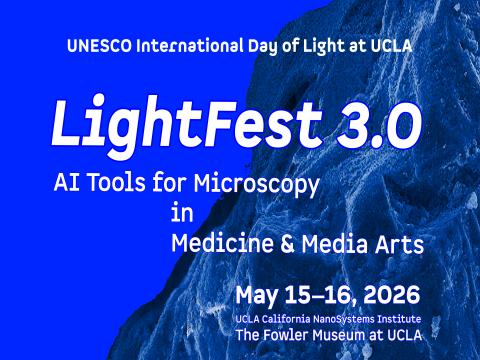
Presented by the UCLA Art|Sci Center in collaboration with the Advanced Light Microscopy & Spectroscopy (ALMS) Lab at the California NanoSystems Institute (CNSI) and the Smart Image Content Research Center at Chung-Ang University, South Korea.
LightFest 3.0 brings together artists, scientists, medical researchers, and cultural practitioners to explore light across scales—from AI microscopy and spectroscopy to media arts, sustainability, and contemplative cultural practices. Organized in conjunction with UNESCO International Day of Light, the two-day symposium examines how imaging technologies are transforming medicine, scientific research, and creative expression.
The 2026 UNESCO theme of Light for a Sustainable Future, frames the symposium’s focus on the relationship between light, health, environmental awareness, and interdisciplinary collaboration. Across scientific imaging, AI research, medicine, and media arts, the program asks how technologies of light can contribute to more sustainable and interconnected futures.
Held each May in honor of the first successful laser demonstration on May 16, 1960, in Malibu, California, the program also highlights emerging collaborations between UCLA CNSI, Leica Microsystems, the UCLA Art|Sci Center, and Chung-Ang University’s Smart Image Content Research Center, Yangchenma Arts, and the Gaden Shartse Monastic University, connecting AI research, scientific imaging, and media arts through interdisciplinary exchange.
Dr. Paul Thomas, Honorary Professor at UNSW Art and Design and founder of the Studio for Transdisciplinary Art Research as well as the founder and series-chair of the Transdisciplinary Imaging Conference series 2010-2022. In 2000 he instigated and was the founding Director of the Biennale of Electronic Arts Perth 2002, 2004 and 2007. As an artist he is a pioneer of transdisciplinary art practice. His practice led research takes not only inspiration from nanoscience and quantum theory, but actually operates there.
Throughout the 20th century, radical experimental artists have challenged the fundamental questions brought to the surface by quantum mechanics, highlighting the invisible forces at play. Here, the observer is integral to quantum physics, becoming part of what is observed, shaping the visualisations of the elusive quantum phenomena. Drawing examples of two artists, Thomas Wilfred, and Takis from the David Bermant Foundation, and artwork from Dr. Paul Thomas' own practice, he will discuss the concepts of duration from a quantum perspective in connection to related visualising phenomena. The artworks create visual sensations and expressions of the immense complexity of visualising the invisible, ineffable, and intangible.
Following the talk, we will be joined by special guests: Kurt Hentschläger, Andrea Rassell, and Bill Seaman
Using their phones, visitors can activate AR by pointing at a star embedded in the pavement, capturing an image of themselves surrounded by shimmering gold dust—a nod to the area’s Gold Rush roots and the universal truth that we are all made of stardust. With their permission, participants will have the option to contribute their photos to a digital gallery on the Santa Clarita town website, creating a collective celebration of the community’s spirit.
What do we value? What is value? To address this question, we are using gold atoms as a metaphor and as an actual material that has arrived on Earth from space. Through storytelling, projections, and food experiences covered in edible gold, the audience participates in a speculative narrative about value, matter, and the future of humanity. The project unfolds through four scenes, each accompanied by a tasting ritual and visual narrative: Cosmic Gold, Gold Rush, Atomic Gold, and Space Tourism.
As hosts of the HOX Zodiac Celebration, we welcome you into the spirit of the Year of the Fire Horse — a lunar cycle that carries energy, movement, and transformation. In the language of HOX, the horse represents momentum and connection, bringing together art, science, and cultural imagination. We invite you to gather with us across shared digital space: bring a dish to share virtually, tell a story, reflect on your experiences, and exchange culture and knowledge as we celebrate this vibrant new cycle together.
12PM PT, February 22, 2026 | From wherever you are,
Join us as we celebrate the Lunar New Year of the Fire Horse alongside inspiring artists, scientists, scholars, and the vibrant community born under the sign of the horse. This special gathering brings together creativity, knowledge, and cultural spirit, inviting you to connect, reflect, and begin the new cycle with energy, curiosity, and shared celebration.
Recently, Shanghai Institute of Visual Arts (SIVA) hosted a distinctive and immersive HOX Zodiac intensive workshop. Invited by the DeTao Masters Academy and jointly organized by the School of Future Design at Shanghai Institute of Visual Arts, internationally renowned media artist and UCLA Design Media Arts professor Victoria Vesna led students in an in-depth dialogue centered on genetic science, zodiac culture, and contemporary art.
The HOX ZODIAC project has evolved over the past 18 years and has previously been exhibited in Los Angeles, New York, Hong Kong, Taiwan, Tsukuba, Vienna, Paris, Motovun, and Slovenia. Rooted in Chinese zodiac culture and coinciding with the transition from one lunar year to the next, this marked the project’s first presentation in mainland China — both a cultural homecoming and a timely, symbolically resonant moment.
A Performative / Participatory Luncheon
The workshop culminated in a performative luncheon that brought together faculty and students from SIVA, alongside invited artists, engineers, and scientists. Seated at a long table according to their zodiac signs, guests became part of a carefully staged interdisciplinary performance. Students presented each dish in sequence, pairing food with concise narratives that linked zodiac symbolism to genetics, ecology, and evolving relationships between humans and animals.
Using the zodiac as a shared language, the event unfolded as a warm yet intellectually charged exchange between art and science. Conversation flowed freely, and ideas collided across disciplines.
In his closing remarks, Lin Min, Executive Vice President of SIVA, praised the students’ work and emphasized the importance of engaging with traditional Chinese culture through contemporary, interdisciplinary approaches. He encouraged students to develop cultural confidence and to contribute new Chinese narratives within a global context. He also highlighted the workshop’s underlying philosophy of non-anthropocentrism, where humans and animals are understood as equal participants in a shared ecological system — an idea with growing relevance for our collective future.
Honored Guests (by Zodiac cycle):
Rat—闫金丽 Yan Jinli; Ox—马麟鸿 Ma Linhong; Tiger—熊洁 Xiong Jie; Dragon—吴俊 Wu Jun, 薛刚 Xue Gang, Soeun Bae; Snake—张弘 Zhang Hong; Horse—陈月浩 Chen Yuehao, 刘玉婷 Liu Yuting; Sheep—金豪 Jin Hao, 陈迪辉 Chen Dihui; Monkey—张恒 Zhang Heng; Rooster—林敏 Lin Min; Dog—木巾 Mujin.
工作坊组织 (Workshop Coordinator):
Dragon—李天娇 (Li Tianjiao)
摄影 (Photographer):
Pig—赵奕瑶 (Zhao Yiyao)
翻译(Translator)
Dragon—张婷婷 (Zhang Tingting)
特别致谢 (Special Thanks):
Rat—闫金丽 (Yan Jinli)
Students: Mouse—丁奕程 Ding Yicheng; Dog—查恒烨 Cha Hengye, 丁予宁 Ding Yuning, 刘一涵 Liu Yihan; Monkey—陈定鸿 Chen Dinghong; Rooster—刘慕瑶 Liu Muyao; Pig—郝婕 Hao Jie, 刘宇琦 Liu Yuqi, 马千画 Ma Qianhua, 沈乐然 Shen Leran, 汪欣月 Wang Xinyue.
The UCLA Art Sci Center is excited to continue its research and partnership with the Advanced Light Microscopy and Spectroscopy (ALMS) Lab. This collaboration bridges art, science, and technology through innovative imaging and interdisciplinary exploration.
The Advanced Light Microscopy and Spectroscopy (ALMS) laboratories provide a unique collection of high-end, customized fluorescence microscopes, small-animal imaging devices, and fluorescent probes to perform fluorescence-based measurements at various spatial (nm to cm), temporal (ns to days) and spectral (UV-NIR ) ranges. Our laboratory provides consultative services and offers support for the application of novel spectroscopic methods and advanced microscopy techniques to achieve high spatial and temporal resolution from whole in vivo animal imaging down to sub-70 nm imaging using super-resolution nanoscopy techniques. Along with access to specialized state-of-the-art instrumentation, we train investigators in advanced imaging techniques which are used to study macromolecules, cellular dynamics and to characterize biomaterials with nanometer-accuracy. Our laboratories offer open access to all academic investigators from local, national and overseas universities as well as to small start-up and mid-size companies.
Laurent A. Bentolila, Ph.D.
Dr. Bentolila is Director of the Advanced Light Microscopy/Spectroscopy Laboratory, the Macro-Scale Imaging Laboratory, the Leica Microsystems Center of Excellence, and a Senior Research Scientist at the California NanoSystems Institute, CNSI, at UCLA. Dr. Bentolila’s long-standing research interest focuses on the application of nanotechnology and advanced light microscopy techniques to biology and medicine. Towards this goal, Dr. Bentolila has developed novel fluorescent probes and assembled a unique collection of custom-built and commercial optical microscopes used for the study of macromolecules, cellular dynamics, and nanoscale characterization of biomaterials. Since joining UCLA in 2002, he has received continuous federal and institutional funding to develop multi-disciplinary research programs and support a state-of-the-art optical microscopy Technology Center that fosters innovation across disciplines and facilitate university collaborations with industry. Dr. Bentolila is the recipient of several awards including the European Molecular Biology Organization and the Burroughs Welcome Fund.
Haley L. Marks, Ph.D.
Dr. Haley L. Marks, Ph.D. is a biomedical engineer with interests in nano-biosensor research, translational medicine, and optics education. She has expertise in developing novel reporter dyes, nanoparticles, and has extensive experience working with spectroscopy/microscopy instrumentation, 3D printing, and developing microfluidic and lateral flow assay platforms. Since joining CNSI in 2022, Haley has served as a technical expert, providing advanced light microscopy training and services to ALMS users. She works developing and optimizing ALMS’s existing super-resolution and high-speed optical methods, developing strategies and imaging tools for in vivo imaging, and optimizing and disseminating computational imaging techniques. Haley was a recipient of the Whitaker International Fellowship and of the SPIE Franz Hillenkamp Fellowship.
The UCLA Art | Sci Center is excited to announce its new partnership with The Smart Image Content Research Center, uniting art, science, and innovation through collaborative exploration.
Hak Gu Kim
Hak Gu Kim is an Assistant Professor at Graduate School of Advanced Imaging Science, Multimedia & Films (GSAIM), Chung-Ang University, where he is leading Immersive Reality & Integrated Systems Lab (IRIS LAB). Before joining Chung-Ang University, He was a postdoctoral researcher in School of Computer and Communication Sciences (IC), a visiting postdoctoral researcher in Electrical Engineering at École Polytechnique Fédérale de Lausanne (EPFL), Lausanne, Switzerland. He received the B.S. and M.S. degrees in School of Electronic Engineering at Inha University, Incheon, Korea, in 2012 and 2014, respectively. He received the Ph.D. degree in School of Electrical Engineering at KAIST, Daejeon, Korea, in 2019. His research interests lie in developing state-of-the-art machine learning and deep learning-based integrated systems to shape the future of immersive reality (e.g., 3D, AR, VR, XR, Metaverse), focusing on the convergence of generative AI and reality.
Hyeokjun Kweon
Hyeokjun Kweon is an Assistant Professor at the Graduate School of Advanced Imaging Science, Multimedia & Film (GSAIM), Chung-Ang University. He currently leads the Foundational Vision Laboratory (FoV LAB). He received his B.S., M.S., and Ph.D. degrees in Mechanical Engineering from KAIST in 2018, 2020, and 2025, respectively. His research interests include computer vision and deep learning. He is particularly interested in how intelligent visual systems can learn effectively from limited data, adapt dynamically across domains, and collaborate meaningfully with humans. His long-term goal is to develop generalizable and human-aligned visual AI models that can serve as reliable companions in real-world applications. His research has been selected for an oral presentation at CVPR 2024 (top 0.8% of 11,532 submissions) and a highlight paper at CVPR 2025 (top 2.6% of 13,008 submissions).
Jihyong Oh
Jihyong Oh is an Assistant Professor at the Graduate School of Advanced Imaging Science, Multimedia & Film (GSAIM) at Chung-Ang University (CAU; Seoul, South Korea), and has been leading the Creative Vision and Multimedia Lab (https://cmlab.cau.ac.kr/) since September 2023. Prior to this, he was a postdoctoral researcher at VICLAB at KAIST (Daejeon, South Korea). He received his B.E., M.E., and Ph.D. degrees in Electrical Engineering from KAIST in 2017, 2019, and 2023, respectively. He was a research intern at Meta Reality Labs in 2022. His research primarily focuses on low-level vision, image/video restoration, 3D vision, and generative AI. He has published papers at CVPR, ICCV, ECCV, AAAI, TPAMI, TCSVT, and Remote Sensing, and serves as a reviewer for these conferences and journals, as well as for SIGGRAPH and IEEE TPAMI, TIP, TGRS, and Access. He received Outstanding Reviewer Awards for ICCV 2021 and CVPR 2024.
Jin Wan Park
Jin Wan Park is a Professor at the Graduate School of Advanced Imaging Science, Multimedia & Film (GSAIM), Chung-Ang University. He received his MFA in Computer Animation and Interactive Media from Pratt Institute in 1998, during which his animation "BUG" was selected for the SIGGRAPH Electronic Theater Program. He also holds a Bachelor’s degree in Computer Science from Chung-Ang University. As both an artist and a scientist, Professor Park’s work centers on pioneering new forms of artistic expression made possible through advances in science and technology. His distinguished career includes roles as Director General of R&D at Korea’s Ministry of Culture, Sports and Tourism and as Dean of the Graduate School of Advanced Imaging Science at Chung-Ang University. Currently, he leads the BK21 project group for AI & Contents. Professor Park’s creative achievements have been showcased in dozens of international exhibitions—including over ten appearances at the SIGGRAPH Art Gallery—and he has authored more than 180 academic papers, with four published in Leonardo. Additionally, he has served four times as the Art Gallery Director for ISEA and SIGGRAPH in Asia.
Sanglim Han
Sanglim Han is a media artist, researcher, and Assistant Professor at the Graduate School of Advanced Imaging Science, Multimedia & Film (GSAIM) at Chung-Ang University, where she also serves as the director of the Generative Media Art Lab. Her practice involves creating generative media art that transforms data into sensory experiences. Using technologies like AI and VR, she critically examines contemporary techno-culture by building virtual worlds where digital nature and algorithm-driven materiality coexist. Her work has been presented extensively across North America, Europe, Asia, and Africa. Notable solo exhibitions include the “Digital Ecologies of the Self” at the International Conference on Videogame Science and Arts and an exhibition at the San Diego Media Arts Center. She has participated in major international festivals such as the QLD XR Festival, Ars Electronica, the PROYECTOR Festival, and Video Vortex XI at the Kochi-Muziris Biennale. Han has presented at prestigious academic forums, including the International Symposium on Electronic Art and the Biennial Symposium for Arts and Technology. She received her BFA from the School of the Art Institute of Chicago and her MFA from UCLA.