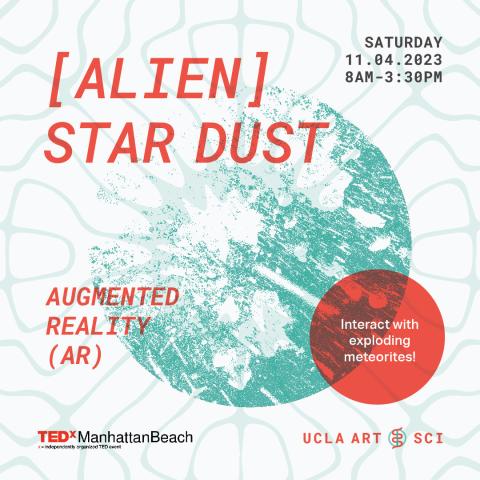
UCLA ArtSci Center is excited to take part in TEDx Manhattan Beach again, showcasing the "Alien Star Dust" AR experience. This year’s event, FUTURE SHAPING, will be held on November 4, 2023, at Mira Costa High School.
ALIEN STAR DUST: https://alienstardust.com
DataX Workshops series Designing our Future: Environment, Community and Technology
DataX presents Professor of Information Studies, Ramesh Srinivasan, in conversation with an interdisciplinary set of UCLA professors focused on environmental issues such as climate change and their intersection with questions of justice and voice in relation to the proliferation and use of big data. This new series will feature a hallmark event each quarter! Registration required.
The event will have an online as well as in person* option.
Guest Faculty:
Victoria Vesna is an Artist and Professor at the UCLA Department of Design Media Arts and Director of the Art|Sci center at the School of the Arts and California Nanosystems Institute (CNSI).
Karen McKinnon is an Assistant Professor in the Institute of the Environment and Sustainability, the Department of Statistics and Data Science, and the Department of Atmospheric and Oceanic Sciences all at UCLA.
Alesia Montgomery is an Assistant Professor at UCLA’s Institute of the Environment and Sustainability and in African American Studies.
*In person location: Collins Conference Room, James West Alumni Center on the UCLA campus.
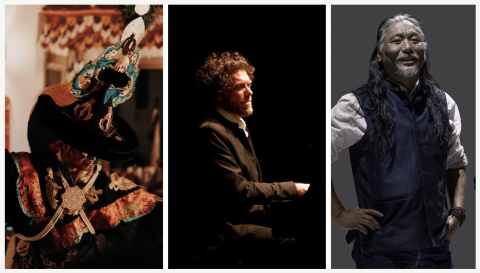
Image credits: Tenzin Choegyal. Photo courtesy of the artist
Simone Giuliani (photo 1). Photo by Marlon Krieger
Simone Giuliani (photo 2). Photo courtesy of the artist
Tsering Dorjee Bawa. Photo by Sej Saraiya
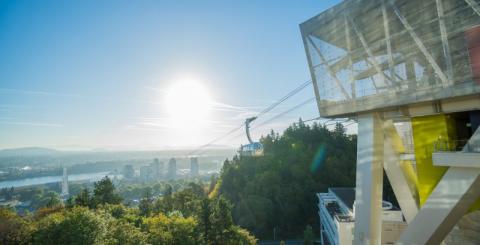
WACD 2023 will be in Portland Oregon on October 12 and 13.
WACD is a Chapter of the Association of Biomolecular Resource Facilities. The WACD aims to create a regional group of professionals from research focused institutions who share an interest in the development, operation and advancement of innovative, cost effective high-throughput technologies and services. Annual meetings will provide an opportunity for the group to share experiences and challenges and to form relationships with peers they can connect with throughout the year on topics of interest.
Friday, October 13th
8:30-9:00 Welcome: Coffee & Pastries
9:00-10:30 Session 5: Cores for the Common Good – examples of cores influencing real world outcomes and demonstrating professional avenues and collaborations
Moderator: Isabelle Girard (UCD)
Speaker: Chris Harrington (OHSU) and Jackie Shannon (OHSU), “Cores in Support of Impactful Innovation: the Healthy Oregon Project”
Speaker: Brett Phinney (UCD), “Developing Proteomic Genotyping for the Common Good”
Speaker: Victoria Vesna (UCLA), “Visualizing Frequencies: Art and Science from Atomic to Cosmic Dimensions”
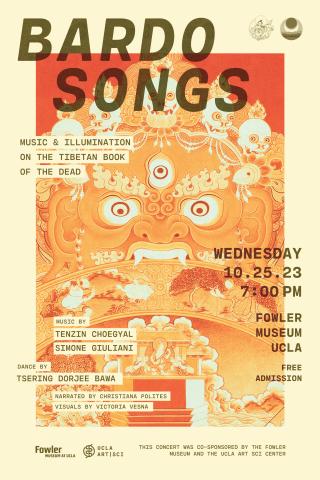
Tenzin Choegyal, Simone Giuliani, Tsering Dorjee Bawa, Christiana Polites, Victoria Vesna
The quintessential text, attributed to the eighth century Buddhist Vajra master Padmasambhava, provides insight and direct instructions on how to navigate through the stages of the Bardo, the intermediary state between life and death. According to the teachings of Tibetan Buddhism, the Bardo journey offers practitioners a precious opportunity to awaken to their true Buddha nature and find liberation from suffering.
Internationally acclaimed Tibetan singer/songwriter Tenzin Choegyal will be joined by award-winning composer Simone Giuliani on piano and actor, musician, and dancer Tsering Dorjee Bawa, performing the rare Black Hat masked ritual dance. The concert is narrated by Christiana Polites, director of Tibetan Medicine & Buddhist Center Pure Land Farms, with visuals produced by media artist and director of the UCLA Art | Sci Center, Victoria Vesna in collaboration with John Brumley and Dillon Bastan.
About the Artists
Tenzin Choegyal is a world renowned musician in the Tibetan tradition. The son of Tibetan nomads, he feels a particular connection to the music of the high Himalayan plateau. While proudly continuing the unbroken nomadic lineage which is central to his repertoire, Tenzin also embraces opportunities to take his music into more contemporary, uncharted territory, both in the studio and on stage. Tenzin has opened for His Holiness the Dalai Lama and collaborated with Philip Glass, Patti Smith, Anoushka Shankar, and Charlotte Gainsbourg. Alongside Jesse Paris Smith and Laurie Anderson, he recorded the 2021 Grammy-nominated Songs from the Bardo, released through Smithsonian Folkways. He also has nine independent albums, three with his fusion band Tibet2Timbuk2.
Tsering Dorjee Bawa is an award-winning artist who has been a Tibetan music and arts performer for almost three decades. He earned his master’s degree studying Tibetan secular dance and music at the Tibetan Institute of Performing Arts (TIPA), Dharamsala, India, where he was privileged to study under legendary artists. He has since traveled the world sharing his knowledge and performing Tibetan Opera, central Tibetan Step Dance, and Cham, a series of colorful, masked ritual dances. In addition to performing onstage from Seattle Children’s Theatre to Lincoln Center in New York, he has acted in several notable films, including the 1999 Oscar-nominated Himalaya, and My Son Tenzin (2017). Tsering resides in the Bay Area, where he has established a community school program to preserve Tibetan language, music, and dance for a new generation.
Simone Giuliani is a director, producer, and composer born in Florence, Italy, and based in New York and Los Angeles. He has worked with such artists as Andrea Bocelli, Wu-Tang Clan, Cibo Matto, Bebel Gilberto, and many more. He has collaborated with the London Symphony Orchestra and the Royal Philharmonic Orchestra, and directed a live concert for Pope Francis inside the Roman Forum. Giuliani is director of programs for MOMENT NYC, a music education non-profit presenting the history of music in New York City through performances in public schools. He is co-founder of Yangchenma Arts & Music, a community organization celebrating the richness and diversity of human cultures through their artistic and musical traditions.
This program is co-sponsored by the UCLA Art | Sci Center and supported by a grant from Lilly Endowment Inc.
"The California Spangled Cat is a completely new breed of American Domestic feline. All the genetic magic that produces the lush spotted coats of the world's big cats has been duplicated for the small, perfect bodies of these leopards for your living room."
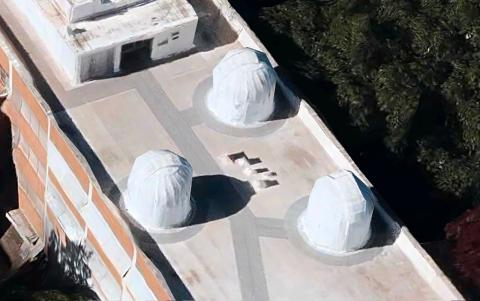
On Tuesday, September 26th, from 2 to 7 pm, the California Snow Leopard will be visible through a telescope placed on the rooftop of the UCLA Planetarium, buzzing with dragonflies.
The little creature with leopard spangles on a white coat found its way into the world paired with an accompanying silver bowl through the 1986 Neiman Marcus Christmas Book, an American luxury mail-order catalog. Its creator, Hollywood screenwriter Paul Casey Jr., developed the exclusive animal as a living memorial to its endangered relatives in the wild.
Fur coats were offered for sale in the same catalog just a few pages away. In addition to the high price of $1.400, the delivery time for the cat, which was difficult to breed in its snow-white form, was 8 months. The cat only found few buyers, and gradually Casey had to refocus his excitable mind on the more promising among his many projects. Thus, the process of the little leopard’s vanishment already began when it was born.
According to The International Cat Association, it has fully disappeared by now, foreshadowing a tragic parallel to its big relatives. In cat breeder circles, sometimes grey or ruddy specimens still appear and are, like the original, called “California Spangled”.
The white variant—the snow leopard—whose birth under the Californian sun was certainly the least expected and who was not even pictured in said Christmas catalog, but only evoked in enthusiastic words, dissolves, however, every day a little more - a possible improbability or improbable possibility, as also its name fades away.
The rare chance to capture the phantom through a telescope was therefore unforeseeable and revives the idea that the animal could be of enchanted nature.
About the artist:
Christoph Kilian, *1983, studied media arts at the Bauhaus University Weimar and the Academy of Media Arts Cologne. He lives between Cologne, Salzburg and Los Angeles, where he completed a guest study program at the ArtCenter College of Design in 2014 and currently is artist-in-residence at the UCLA Art|Sci Center. In a cross-media play and clash with technology, he constructs machine fairy tales that - often on the verge of futility - trace the magical.
A symposium addressing how to enact a Science-Art Institute for Transformative Creativity
"ENFOLD SCI-ART will be closer to the Platonic version of a symposium where discussion and brainstorming dominate instead of our current definition with long talks. We will all first meet in an art workshop to initiate conversation on the value of a Science-Art Institute. We then propose a series of lightning talks by scientists, artists, academic administrators, museum directors, and foundation/industry leadership followed by breakout groups to model interacting for innovation and concluding with addressing how an Science-Art Institute could be actuated and sustained. The talks will not be about the speaker’s work/contributions. Instead, each talk should include their view and the value and challenges of establishing such an institute."
Enfold conference will be held September 21-22, 2023 at the campus of the Burroughs Wellcome Fund (North Carolina, USA).
Day 1
09.21.2023
⏰ 2:00 - 2:30 | talks:
Day Jay, Arthur Miller, Ahna Skop, Michael John Gorman, Victoria Vesna, Mauro Martino
‘If the doors of perception were cleansed, every thing would appear to man as it is, infinite.’ – William Blake
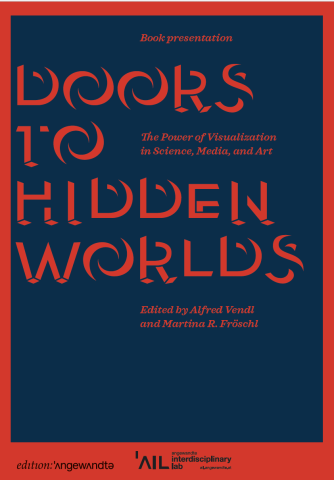
The visualization of often encoded data is making new, previously hidden but nevertheless real worlds accessible to humankind. Art is taking up this new knowledge and transferring it into new dimensions through visualization.
This book brings together a wide spectrum of contributions on visualization in science, media, and art: notable experts and associates of the Science Visualization Lab at the University of Applied Arts Vienna present outstanding examples of innovative visualization and provide insight into their working methods. This publication gives insight into the ways of thinking and working of well-known scientists, media experts, and artists; an opulent publication with numerous illustrations and augmented-reality features
The publication features "Nano: Bottom Up and In Between" an essay by Dr. James Gimzewski and Dr. Victoria Vesna.
Edited by Alfred Vendl and Martina R. Fröschl, Science Visualization Lab, Digital Arts, University of Applied Arts Vienna
Welcome: Gerald Bast, Rector of the University of Applied Arts Vienna
Book presentation:
Alfred Vendl and Martina R. Fröschl
This English-language publication appears with De Gruyter in the Edition Angewandte book series of the University of Applied Arts Vienna.
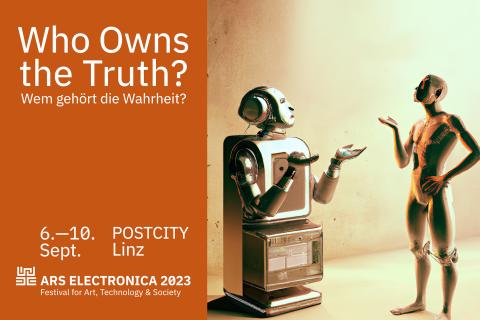
The Next Renaissance panel discussion is set for Friday, September 8, 2023, 12-1 pm CET, and will be a featured conversation moderated by Victoria Vesna at the Ars Electronica Festival in Linz, Austria.
Chair:
Victoria Vesna (US)
Victoria Vesna is an Artist and Professor at the UCLA Department of Design Media Arts and Director of the Art Sci center at the School of the Arts & Architecture and the California NanoSystems Institute (CNSI). At the UCLA Art Sci center, she organizes and hosts events and is busy co-curating with Anuradha Vikram Atmosphere of Sound: sonic arts in times of climate disruption for the Getty PST: Art X Science and is writing a book entitled: Vibrations Matter: Art & Science of Deep Listening (2024).
Speakers:
Lucia Ronchetti (IT)
Born in Rome in 1963, Lucia Ronchetti is a composer dedicated to music theater projects. In 2023, the opera Das fliegende Klassenzimmer made its debut at the Deutsche Oper am Rhein, the Staatsoper Hannover produced the chamber opera Pinocchios Abenteuer and the choral opera Chronicles of Loneliness was premiered at the the ACHT BRÜCKEN in Köln. Two new opera productions will be presented in 2024, Searching for Zenobia for the Münchener Biennale/Staatstheater Braunschweig and Der Doppelgänger for the Schwetzinger SWR Festspiele/ Staatstheater Luzern.
John Palmesino (IT)
John Palmesino is an architect and urbanist. Together with Ann-Sofi Rönnskog he is the founder of Territorial Agency, an independent organisation that combines contemporary architecture, science, art, advocacy and action. Recent projects include Plan the Planet, Sensible Zone, Oceans in Transformation, the Museum of Oil and Anthropocene Observatory. They are chief-curators of the Lisbon Triennale 2025. Territorial Agency are the recipients of the STARTS 21 Grand Prize of the European Commission honouring innovation in technology, industry and society stimulated by the arts.
Rachel Armstrong (IE)
I am ZAP (independent) professor of Regenerative Architecture at KU Leuven and co-ordinator for the “Microbial Hydroponics” EIC Pathfinder Challenges project. I am Vice Chair of Supervisory Board of the EIT C&C and a Senior TED Fellow. I develop an approach for the design of applications for next generation sustainable, or “regenerative” architecture that exists at the intersection of design, architecture, science & ecology
Alistair Hudson (GB)
Alistair Hudson is the Scientific-Artistic Chairman of the ZKM | Center for Art and Media Karlsruhe since April 1, 2023. Hudson is a curator and museum director with broad-ranging international experience. He combines contemporary curatorial expertise with a profound knowledge of the relationship between art, technology and society. From 2018 to 2022 he served as director of two museums in Manchester: the Manchester Art Gallery and The Whitworth. The latter is the art museum of the University of Manchester, where he was also Professor of Useful Art. Alistair Hudson’s concept of a »useful museum« envisions artistic and cultural institutions as centres of social responsibility and transformation.Together with the artist Tania Bruguera he heads the international network Asociación de Arte Útil.
Franz Giessibl (DE)
Franz Giessibl was born in 1962 in Amerang, a small town in Bavaria, Germany. In1991, he finished his PhD work in experimental physics with Nobel Laureate and nanoscience pioneer Gerd Binnig. He then moved to Sunnyvale, California to work with Park Scientific Instruments, a manufacturer of atomic force microscopes as a director of vacuum products. In1995, he joined McKinsey&Company in Germany. While working as a management consultant, he established a laboratory in his home and invented the qPlus® sensor, an “eye” for the exploration of atoms and nanostructures that is used in hundreds of laboratories around the world today. In 2005, he obtained offers for chairs at the Universities of Bristol (UK) and Regensburg (D), establishing the Chair in Experimental Quantum Nanoscience at University of Regensburg in 2006. He is married to Birgit Giessibl, they raised two sons.
Charles Landry (DE/GB)
Charles Landry is the inventor of the Creative Bureaucracy concept and co-founder of the Festival in Berlin as well as the Creative City concept. He wrote a a series of nine short books including The Creative Bureaucracy; Psychology & the City,; The Digitized City: Influence & Impact; Cities of Ambition. See www.charleslandry.com. Charles helps cities assess their potential afresh. He sees himself as a ‚critical friend‘ to the cities he works with. He seeks to inspire, stimulate, challenge and facilitate. He combines a global perspective with an acute sense of what matters locally. He grounds ideas in practical projects.
COLOR, LIGHT, MOTION is an online series featuring media artists and scholars in dialogue about artworks from the Bermant Collection of media and kinetic arts. Each featured presenter will discuss selected artworks in history and context and in relation to their own work and connections. This series is produced in collaboration with Harvestworks NY and the David Bermant Foundation.
EPISODE 21:
George Quasha
The Syntax of Moving Awareness
RESPONDERS: Gary Hill and Toni Dove
George Quasha is a poet, artist, musician and writer working in diverse mediums to explore certain principles (e.g., axiality, ecoproprioception). For his primary medium poiesis he has invented the genre preverbs as a medium of axial language and “linguality at zero point.” He extends axiality & poiesis to art, music, performance, and conscience body practice.
His ongoing video work was awarded a Guggenheim Fellowship (2006), principally for art is/music is/poetry is (Speaking Portraits), for which during the last twenty-three years he has recorded over a thousand artists, poets, and composers in eleven countries saying what art, music, or poetry is (art-is-international.org)—represented in the book art is (Speaking Portraits) (2016).
For many years he has collaborated with Gary Hill and Charles Stein in performance. His sculpture (Axial Stones), drawings and video have been exhibited in various venues, including the Snite Museum of Art, the Manfred Baumgartner Gallery, White Box, the Samuel Dorsky Museum and biennials (Poland, Switzerland, New York). Axial Stones: An Art of Precarious Balance (foreword by Carter Ratcliff, 2006) explores the axial principle in his sculpture. Other writing on art includes An Art of Limina: Gary Hill’s Works & Writings (with Charles Stein, foreword by Lynne Cooke, 2009—now online at https://www.academia.edu/28928186/An_Art_of_Limina_Gary_Hills_Works_and_...).
His main work in axial language poiesis is preverbs, of which seven of the thirteen books have been published to date, including Not Even Rabbits Go Down This Hole and Waking from Myself. Poetry in Principle: Essays in Poetics (foreword by Edward Casey, 2019) contains recent writing on “the poetics of thinking.” Zero Point Poiesis: George Quasha’s Axial Art (2022) is a collection of writings on his poetry, art and thought by sixteen authors, edited by Burt Kimmelman, foreword by Jerome McGann. He was awarded the T-Space 10th annual Poetry Award in 2022.
Edited anthologies include America a Prophecy: A New Reading of American Poetry from Pre-Colombian Times to the Present (with Jerome Rothenberg, 1973/2012), Open Poetry: Four Anthologies of Expanded Poems (with Ronald Gross, plus Emmett Williams, John Robert Colombo, & Walter Lowenfels, 1973), An Active Anthology (with Susan Quasha, 1974), and The Station Hill Blanchot Reader (with Charles Stein, 1999).
He lives in Barrytown, New York, collaborating with Susan Quasha on photography/preverbs), and together they publish Station Hill Press.