'In the Belly of the Beast - Southern California Art, Technology, Science and Society Nexus- A Historical Landscape'
Speaker: Marko Peljhan
Responders: Darko Fritz, Andreas Broeckmann, and Patrick McCray
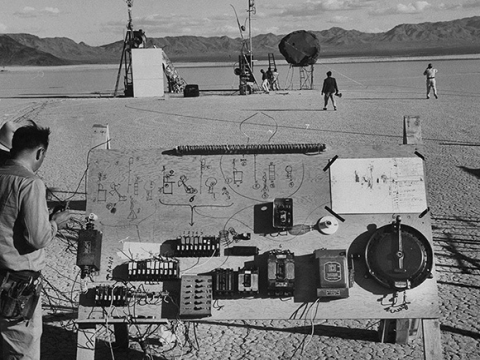
Marko Peljhan is a distinguished artist, researcher, and professor whose work spans the fields of art, technology, and science. Born in 1969 in Slovenia, he has significantly contributed to new media art through his innovative projects and research. Peljhan co-founded the arts and technology organization Projekt Atol in 1992 and played a crucial role in establishing the Ljubljana-based new-media laboratory Ljudmila a year later.
One of his most notable projects is Makrolab, an autonomous communications and research laboratory focused on weather, climate, telecommunications and migrations research, First presented at Documenta X in Kassel in 1997. Makrolab has since operated in various locations around the world, including Western Australia, Venetian Lagoon and the Scottish Highlands. Peljhan's work often addresses themes of surveillance, geopolitics, and environmental issues. Among others he co-founded the Interpolar Transnational Art Science Constellation in 2002 and in 2008 with fellow artist and colleague Matthew Biederman the Arctic Perspective Initiative. He is the recipient of many prizes for his work, including the 2001 Golden Nica Prize at Ars Electronica with Carsten Nicolai and his work has been exhibited internationally at multiple biennales (Venice, Lyon, Istanbul, Gwangju, Johannesburg, Moscow…) exhibitions and festivals, such as documenta, ISEA, Ars Electronica and museums and art institutions worldwide YCAM, ICC-NT, PS.1. MOMA, GARAGE...). In 2019 he was the representative of the Republic of Slovenia at the Venice Biennale with the work "Here we go again...SYSTEM-317".
Since 2002, Peljhan also serves as professor and director of the Systemics Lab located in the California Nano Systems Institute at UCSB, he was co-director of the UC Wide Institute for Research in the Arts from 2008-2014 and from 2017-2022 he served as Chair of the Media Arts and Technology Graduate Program at the University of California Santa Barbara. He also served as the coordinator of international cooperation for SPACE-SI Slovenian Centre for Space Sciences and Technologies and helped to conceive and launch the first Slovenian remote sensing satellite, NEMO-HD in 2020. He is also editor at large of the music label rx:tx and is known to operate in the radio spectrum as S54MX.
COLOR, LIGHT, MOTION is an online series featuring media artists and scholars in dialogue about artworks from the Bermant Collection of media and kinetic arts. Each featured presenter will discuss selected artworks in history and context and in relation to their own work and connections. This series is produced in collaboration with Harvestworks NY and the David Bermant Foundation.
Join Santiago Torres, a former postdoctoral scholar in UCLA's Physics and Astronomy Department and a member of the ArtSci Collective, for a great lecture on astrophysics, sound, and art.
Santiago Torres is an astrophysicist passionate about the art of making science and the science of making art. His research delves into the dynamical interactions of celestial bodies, from stars to planets and comets, through the stellar life cycle and beyond. Parallel to his research, he explores the intersection between science, art, and society, and he is the founder of the {ScienceArt:Collective}, a space to connect scientists and artists. He is currently a Marie Skłodowska-Curie Fellow | IST-BRIDGE Fellow at the Institute of Science and Technology Austria (ISTA) and an ArtSci Fellow at the ArtSci Center at the University of California Los Angeles (UCLA).
Location: UCLA Broad Art Center, EDA (Experimental Digital Arts)
240 Charles E Young Dr N,
Los Angeles, CA 90095
EDA (Experimental Digital Arts) is located in room 1250 adjacent to the main entrance of the Broad Arts Center at UCLA.
Parking is available in Lot 3, across the street from the Broad Art Center.
Visitors may use the “Pay by Plate” option in Lot 3 to purchase short-term daily parking permits.
For more parking information please call: 310-825-9007.
The Broad Arts Center is easily reachable by several Los Angeles County public bus lines, including the Metro Rapid, Santa Monica Big Blue Bus, and the Culver City Bus. For a list of specific transit providers and routes, please visit the Public Transit at UCLA.
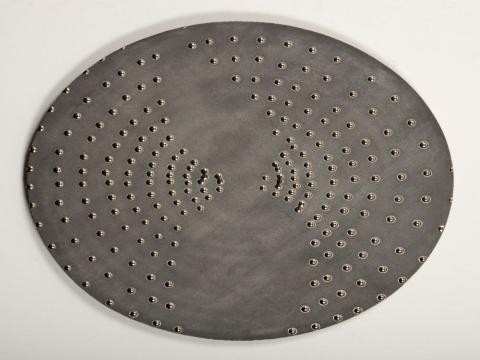
Hear Joel Ong discuss his recent artistic research into breath, wind, and the ‘frozen sound’ contained within objects. Ong’s project, In Silence, feeds spoken audio recordings into a transductive pool of water, revealing the patterns of connection between community members in cymatic vibration waves. Ong is scheduled to exhibit in our forthcoming Getty PST exhibition, Atmosphere of Sound: Sonic Art in Times of Climate Disruption, scheduled to open in September of 2024.
UCLA Broad Art Center, 5pm
Joel Ong is a media artist whose works connect scientific and artistic approaches to the environment, particularly with respect to sound and physical space. Ong’s work explores the way objects and spaces can function as repositories of ‘frozen sound’, and in elucidating these, he is interested in creating what systems theorist Jack Burnham (1968) refers to as “art (that) does not reside in material entities, but in relations between people and between people and the components of their environment”. A serial collaborator, Ong is invested in the broader scope of Art-Science collaborations and is engaged constantly in the discourses and processes that facilitate viewing these two polemical disciplines on similar ground. His graduate interdisciplinary work in nanotechnology and sound was conducted at SymbioticA, the Center of Excellence for Biological Arts at the University of Western Australia. Ong is currently Assistant Professor at the department of Computational Arts at York University in Toronto.
DIRECTIONS:
Location: UCLA Broad Art Center, EDA (Experimental Digital Arts)
240 Charles E Young Dr N,
Los Angeles, CA 90095
EDA (Experimental Digital Arts) is located in room 1250 adjacent to the main entrance of the Broad Arts Center at UCLA.
Parking is available in Lot 3, across the street from the Broad Art Center.
Visitors may use the “Pay by Plate” option in Lot 3 to purchase short-term daily parking permits.
For more parking information please call: 310-825-9007.
The Broad Arts Center is easily reachable by several Los Angeles County public bus lines, including the Metro Rapid, Santa Monica Big Blue Bus, and the Culver City Bus. For a list of specific transit providers and routes, please visit the Public Transit at UCLA.
This LASER is connected to the exhibition opening of Pigeon Art Studio & Animal Creativity at the UCLA Art Sc gallery at CNSI – developed by Aaron Blaisdell, UCLA Psychology Professor and Chair of the Behavioral Neuroscience. His lab at UCLA presents an exhibit featuring pigeons creating digital art, exploring the reasons and processes behind it, and inviting insights into human artistry.
Guest responder is neuroscientist and sci artist Siddharth Ramakrishan who will discuss animal consciousness in labs.
Chaired by: Victoria Vesna
ON SITE at UCLA ArtSci Gallery
Dr. Blaisdell is a Psychology Professor and Chair of the Behavioral Neuroscience area at UCLA, overseeing the Comparative Cognition Lab and the Pigeon Art Project. As a member of the UCLA Brain Research Institute, the UCLA Integrative Center for Learning & Memory, and the UCLA Evolutionary Medicine program, Dr. Blaisdell has an extensive academic background with a BA in Anthropology from SUNY Stony Brook, an MS in Anthropology from Kent State University, a Ph.D. in Behavioral Neuroscience from SUNY Binghamton, and two years of NIH-funded postdoctoral training at Tufts University.
Siddharth Ramakrishnan, PhD., a Neuroscientist, is an Assistant Professor of Biology and the Jennie M. Caruthers Chair in Neuroscience at the University of Puget Sound. His research interests span the field of developmental biology, neuroendocrinology and sensory-motor integration. He is a recent recipient of the NSF CAREER award for early career scientists to explore modulation of the reproductive axis in the brain by endocrine disruptors. As a research scientist at Columbia University, he designed microchips to record from brain cells and used proteins to create bio-batteries and biosensors. As a postdoctoral researcher at UCLA (2006-2009) he studied the development and physiology of reproductive neurons in the zebrafish brain. His previous research addressed pattern-generating networks in snails and how they were modulated to elicit various behaviors.
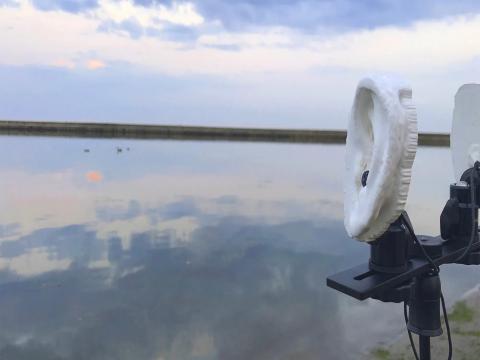
Ivana Dama is a sound artist whose work explores the connection between sound, memory, and human experience. Her work includes audiovisual installation, robotics, and musical performance. Often her projects are influenced by her experience growing up in post-communist Belgrade during the time of the bombings. The memory of the sounds and vibrations of destruction has led her to work with air and sound as a primary medium.
More info: https://www.ivanadama.com
Time: 3pm PDT
Location: UCLA Broad Art Center, EDA (Experimental Digital Arts)
240 Charles E Young Dr N,
Los Angeles, CA 90095
EDA (Experimental Digital Arts) is located in room 1250 adjacent to the main entrance of the Broad Arts Center at UCLA.
Parking is available in Lot 3, across the street from the Broad Art Center.
Visitors may use the “Pay by Plate” option in Lot 3 to purchase short-term daily parking permits.
For more parking information please call: 310-825-9007.
The Broad Arts Center is easily reachable by several Los Angeles County public bus lines, including the Metro Rapid, Santa Monica Big Blue Bus, and the Culver City Bus. For a list of specific transit providers and routes, please visit the Public Transit at UCLA.
Are the experiences of performing live virtually and in analog mutually substitutable? What is lost as a result of mediation? What is gained? How performers can take advantage of the tele-interaction? These and other questions arise for anyone who attempts to be creative with other people remotely in live format. Yet, while taking advantage of the possibility to easily connect with people all over the globe to compose and perform, most of us are missing the “authentic” in-person experience. What is the authenticity that makes the analog performance more rewarding and satisfactory than the remote? Is there a way to turn mediation to our advantage?
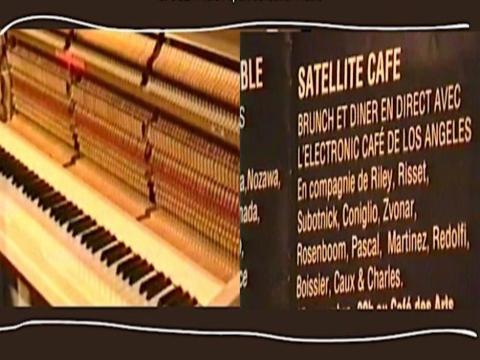
Rather than looking down to the past technology as obsolete, we propose to look at what teleperformance was like in the pre-Zoom era. 30 years ago the possibility to jam live across time and space was a cutting-edge practice that required days of preparation and hours of set up as well as embracing the risk that something would not work. Yet, there’s something to learn from the past practice when technology wasn’t commodified/instantaneously available to a general user.
The video-phone technology (Galloway & Rabinowitz) and computerized instruments with remote control (Yamaha Disclavier) were the key elements of a teleperformance. Watching the ’92 improvisation of two pioneers of experimental music, Terry Riley (Nice, France) and David Rosenboom (Electronic Cafe International, Santa Monica), across time and space we aspire to understand how performers navigated telepresence decades ago and how it impacted their creative practice. The ultimate question concerns the tension between art-making, associated with feeling/affective experience, and disembodying technology, which requires rationality and precision. Is there a way to get around these dichotomies?
Attendees are invited to join an introductory lecture followed by the screening of not previously publicly available recording of the 1992 teleimprovisation, and share their impressions of jamming in the pre-Zoom era.
This event is taking place as a part of Victoria Vesna’s Spring ’24 class “Introduction to Art, Science, and Technology.” Arranged by the Art|Sci Center at UCLA, the event is open to public and will be live streamed.
EDA (Experimental Digital Arts) is located in room 1250 adjacent to the main entrance of the Broad Arts Center at UCLA.
Parking is available in Lot 3, across the street from the Broad Art Center.
Visitors may use the “Pay by Plate” option in Lot 3 to purchase short-term daily parking permits.
For more parking information please call: 310-825-9007.
The Broad Arts Center is easily reachable by several Los Angeles County public bus lines, including the Metro Rapid, Santa Monica Big Blue Bus, and the Culver City Bus. For a list of specific transit providers and routes, please visit the Public Transit at UCLA.
April 11th, 2024
3:00-6:00 PM PDT
UCLA Broad Art Center
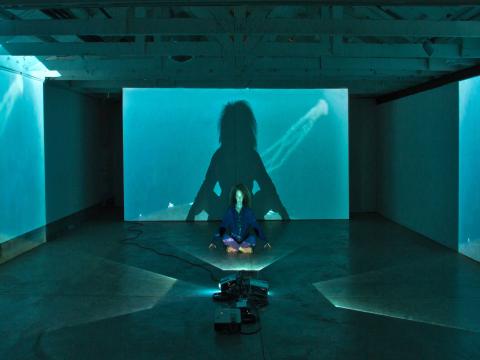
Join the Art|Sci Center in learning about Yolande Harris’ artistic research conducted with Dr. Ari Friedlaender of UCSC. Harris incorporates underwater field recordings of whale vibrations, and realizes her work in glass, bronze, and multi-media forms. She will exhibit in our forthcoming exhibition, Atmosphere of Sound: Sonic Art in Times of Climate Disruption, scheduled to open in September of 2024 in partnership with the 2024 Getty PST initiative.
featuring Hannah Landecker
responder Patricia Olynyk
Chaired by Victoria Vesna
Location: UCLA CNSI, 5th Floor, Presentation Room
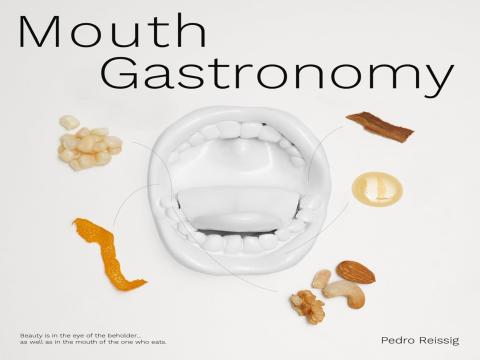
This LASER is connected to the exhibition opening at the UCLA ArtSci gallery at CNSI – developed by Professor Hannah Landecker with her students: "Hot Cling, Shear Magic, and the Mouthfeel of Capitalism:
Images From the History of Ultra Processed Foods" ABOUT THE EXHIBITION: http://artsci.ucla.edu/node/1709
Guest responder is artist Patricia Olynyk, who is a fellow of the UCLA Art Sci Medicine & Media Arts initiative: https://medicineandmediaarts.com
Hannah Landecker, with a Ph.D. in Science and Technology Studies from MIT and a B.Sc. in Cell and Developmental Biology from the University of British Columbia, uses the tools of history and social science to study contemporary developments in the life sciences, and their historical taproots in the twentieth century. She has taught and researched in the fields of history of science, anthropology and sociology. At UCLA she is cross-appointed between the Institute for Society and Genetics, and the Sociology Department. She is currently working on a book called “American Metabolism,” which looks at transformations to the metabolic sciences wrought by the rise of epigenetics, microbiomics, cell signaling and hormone biology.
MORE INFO https://soc.ucla.edu/person/hannah-landecker/
Patricia Olynyk is an artist, writer, and educator whose work explores science and technology-related themes and the ways in which social systems and institutional structures shape our understanding of our place in the world. She is the former director of Washington University’s Graduate School of Art and the Florence and Frank Bush Professor in Art. She holds a courtesy appointment in WashU’s School of Medicine and fellowships in the Institute for Public Health and Living Earth Collaborative, both interdisciplinary hubs that facilitate research across a wide range of fields.
MORE INFO https://patriciaolynyk.com
Join us for the second annual Lightfest! Advanced Light Microscopy Symposium at CNSI. A celebration of UNESCO’s International Day of Light, this event will be held from May 15 – 17, in honor of Theodore Maiman, who fired the first laser right here in southern California on May 16th, 1960.
This symposium will feature invited talks from a selection of light microscopy users, poster presentations and awards, an image contest, and vendor booths. This event is free and open to anyone, we hope to see you there!
Opening Keynote: Adding Dimensions to Intravital Imaging to Better Eavesdrop on Biology
Scott E. Fraser, PhD
University of Southern California
Wednesday, May 15, 2024
Imaging of living specimens can animate the wealth of high-throughput molecular data to better understand complex events ranging from embryonic development to disease processes. We are advancing this approach despite the unavoidable tradeoffs – between spatial & temporal resolution, field of view, limited photon budget – by constructing faster and more efficient light sheet and laser-scanning microscopes that maintain subcellular resolution.
Our two-photon light-sheet microscope combines the deep penetration of two-photon microscopy and the speed of light sheet microscopy to generate images with more than 10x improved imaging speed & sensitivity. Better engineering of the detection objective’s point-spread-function improves this another 3-fold. Two-photon excitation light is far less scattered, permitting subcellular resolution to be maintained better than conventional light sheet microscopes, resulting in 4D (3D over time) cell and molecular imaging with sufficient speed and resolution to unambiguous trace cell lineages, movements and signals in intact systems.
To increase the 5th Dimension (# of simultaneous labels), we are refining new multispectral image analysis tools that exceed the performance of our previous work on Linear Unmixing by orders of magnitude in speed, error propagation and accuracy. Novel denoising strategies using machine learning permit imaging at far lower light levels, yielding rapid and unambiguous analyses without perturbing even fragile multiplex-labeled specimens.
Parallel refinements in label-free approaches extend imaging to patient-derived tissues and even human subjects. The low concentrations of these intrinsic labels required us to refine fluorescence lifetime imaging (FLIM), and combine it with multispectral and advanced denoising tools, to perform intravital imaging in such challenging settings.
Combined, these imaging and analysis tools offer the multi-dimensional imaging required to follow key events in intact systems as they take place, and allow us to use noise and variance as experimental tools rather than experimental limitations.
Schedule:
Day 1 – Wednesday May 15 – CNSI Alfred E Mann Auditorium & Lobby
1:30pm – 2:00pm Participant Registration & Check-In
2:00pm – 3:00pm Welcome & Introduction to UNESCO’s International Day of Light
3:00pm – 4:00pm Session 1: Art in Science – Session Chair Victoria Vesna (UCLA)
Daniel G. Jay (Tufts) | Chromophore assisted light inactivation, fluorescence & electrophoresis art
Walter Gekelman (UCLA) | Using lasers to map the motion of ions in a plasma physics experiment
4:00pm – 5:00pm Session 2: Keynote – Session Chair Laurent Bentolila (UCLA)
Scott E. Fraser, Ph.D. – Provost Professor, Director of Science Initiatives, USC
Adding dimensions to intravital imaging to better eavesdrop on biology
5:00pm – 5:30pm Interactive Fiat Lux installation by the Art|Sci Collective
5:30pm – 7:00pm Networking reception
Day 2 – Thursday May 16 – CNSI Alfred E Mann Family Foundation Auditorium and Lobby
9:00am – 9:30am Light breakfast and vendor showcase
9:30am – 10:45am Session 3: Navigating Neuroscience in 3D – Session Chair Esteban Fernandez (CHLA)
Ivan Lopez (UCLA) | Laser confocal imaging of sensory neurons of the human internal ear
Ranmal Samarasinghe (UCLA) | Modeling and Imaging Neural Networks using Human Brain Assembloids
Peyman Goldshani (UCLA) | New generation 1P & 2P miniaturized microscopes for in-vivo imaging during free behavior
10:45am – 11:00am Coffee break and vendor showcase
11:00am – 12:15pm Session 4: Multiphoton in the Musculoskeletal System – Session Chair Blaise Ndjamen (UCSF)
Jimmy Hu (UCLA) | Multiphoton of living craniofacial stem cells
Kristen Reider (UCLA) | Correlated two photon and atomic force microscopy for characterizing surgically extracted tissues
Tad Kremen (UCLA) | Soft tissue-to-bone healing: Defining the problem and potential solutions
12:15pm – 1:15pm Lunch break and vendor showcase
1:15pm – 2:30pm Session 5: Multimodal and Multiplexed Imaging – Session Chair Brian Jeong (UCLA)
Janielle Cuala (USC) | Multimodal imaging reveals changes in beta cell metabolism and heterogeneity over the course of pregnancy
Lior Kashani Ligumsky (UCLA) | Stop blaming the placenta: Label-free multiphoton microscopy reveals previous cesarean scars are a defining pathology of the Placenta Accreta Spectrum (PAS)
Niles A. Pierce (Caltech) | HCR imaging: multiplexed, quantitative, sensitive, versatile, robust
2:30pm – 2:45pm Coffee break and vendor showcase
2:45pm – 4:00pm Session 6: Beyond the Visible Spectrum – Session Chair Haley Marks (UCLA)
Justin Caram (UCLA) | Seeing the shortwave infrared with novel materials, detectors and interferometric methods
Ellen Sletten (UCLA) | Multiplexed in vivo imaging with near and shortwave infrared polymethine
fluorophores
Eric Potma (UCI) | Nonlinear optical imaging with mid-infrared light
4:00pm – 5:00pm Vendor showcase/poster session
5:00pm – 6:15pm Session 7: Cutting Edge Microscopy Modalities – Session Chair Laurent Bentolila (UCLA)
Enbo Zhu (UCLA) | Multi-View light-sheet imaging system with comprehensive tissue clearing compatibility and large field of view
Liang Gao (UCLA) | Breaking the speed barrier: high-speed light-field microscopy for kilohertz to terahertz 3D imaging
Aydogan Ozcan (UCLA) | Virtual Staining of Label-free Tissue Using Deep Learning
6:15pm – 7:30pm Networking Reception
Day 3 – Friday May 17 – CNSI 3rd Floor Executive Conference Rooms – Brunch & Learn – 10:00 am Vendor Slam Talks (3rd Floor Executive Conference Room)
10:00 am – 2:00 pm Vendor Demo Fair (Labs/Booths)
10:00 am – 2:00 pm
10:30 am – Evan Darling (ONI) | Blinky Blink Blink: A Short Introduction to STORM Super-Resolution
11:00 am – Jan Otto Wirth (Abberior) | MINFLUX tracking of kinesin-1 at the nanometer and millisecond scale
11:30 am – Chris Tsang (LifeCanvas Technologies) | What insights are possible if you could image in 3D
12:00 pm – Gert Vreede (Zeiss) | Lightsheet at Lightfest: Versatile 3D imaging from micro- to mesoscale
12:30 pm – Kevin Mann (Bruker) | Illuminating the Brain:
Mapping and Manipulating Neural activity in 3D
1:00 pm – Fred Sala (Leica Microsystems) | Stellaris FLIM: Rainbow of possibilities
Room 6350 | Andor (Benchtop Confocal BC43)
Lobby | LifeCanvas (SmartBatch Automated Tissue Clearing)
Lobby | Ibidi (perfusion & incubation systems)
Room 2152 | Abberior (MINFLUX & STEDyCon)
2:00 pm Closing Remarks & Awards Ceremony (Auditorium)
Aaron Blaisdell, UCLA Psychology Professor and Chair of the Behavioral Neuroscience
EVENT INFO
Exhibition opening: Wednesday, April 24th, 4- 6 pm
CNSI ArtSci Gallery, 5th floor
570 Westwood Plaza, Los Angeles, CA 90095
The exhibition will be on display through May 2nd, 2024
Please note that visits during workdays are by appointment only. Contact us at least a day in advance to schedule: artscicenter@gmail.com
Pigeons have provided a power house of knowledge on learning, memory, and cognition. Now, they also paint! The Blaisdell lab at UCLA has been studying pigeons making digital art using a touchscreen. The goal is to understand the "why" and the "how" of why pigeons make art. What can this tell us about human art? This exhibit features two collections from our pigeon artists. Step into the pigeon artist studio and see what they've been up to!
Dr. Blaisdell is a Psychology Professor and Chair of the Behavioral Neuroscience area at UCLA, overseeing the Comparative Cognition Lab and the Pigeon Art Project. As a member of the UCLA Brain Research Institute, the UCLA Integrative Center for Learning & Memory, and the UCLA Evolutionary Medicine program, Dr. Blaisdell has an extensive academic background with a BA in Anthropology from SUNY Stony Brook, an MS in Anthropology from Kent State University, a Ph.D. in Behavioral Neuroscience from SUNY Binghamton, and two years of NIH-funded postdoctoral training at Tufts University.